¶ 🧹 Inactive ONU Removal
The Inactive ONU Removal automation allows automatic cleanup of ONUs that remain offline for an extended period within OLTs.
It is an essential routine to keep the network organized, free slots, and prevent accumulation of obsolete ONUs.
In this automation, you define after how many offline days an ONU will be considered eligible for deletion.
¶ 🧭 How to access the automation
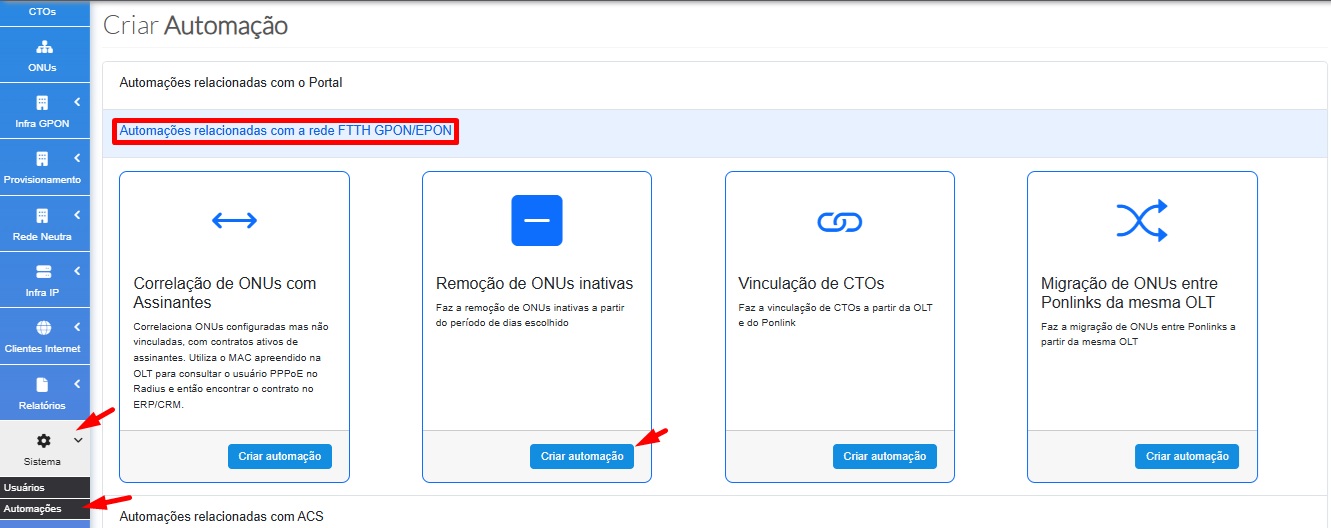
To create the automation:
- Go to System → Automations
- Click Create
- Select the group FTTH GPON/EPON Network Automations
- Click Create Automation
¶ ⚙️ Automation Settings
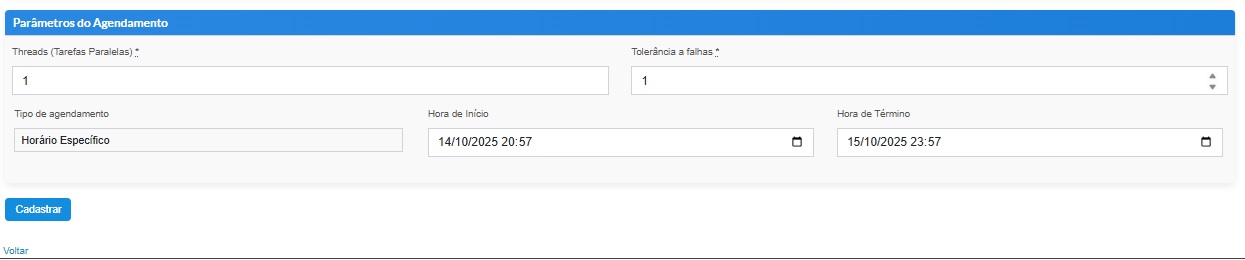
After opening the registration screen, you can configure all execution parameters.
¶ 🏷️ Automation Name
- Enter a custom name.
- If left blank, the system automatically creates a default name.
¶ 🧪 Dry Run Mode (test mode)
- Initially enabled.
- When active, no ONU is removed.
- The system only generates a report of all ONUs that would be deleted.
- To execute real removal, simply uncheck the checkbox.
¶ 🗑️ Remove ONUs with active contracts (advanced option)
- When enabled, even ONUs with an active contract will be removed.
- Must be used with caution, as it directly impacts live customers.
- Recommended only when the database is outdated or inconsistent.
¶ 📅 Offline days for deletion
- Define how many days the ONU must remain offline to be considered eligible for removal.
¶ 🛰️ OLT Selection
Choose one or more OLTs that will participate in the automation:
- Use the side list to select the desired OLTs.
- Click the arrow to move them to the right panel.
- You may include as many OLTs as necessary.
¶ ⚡ Parallel Threads
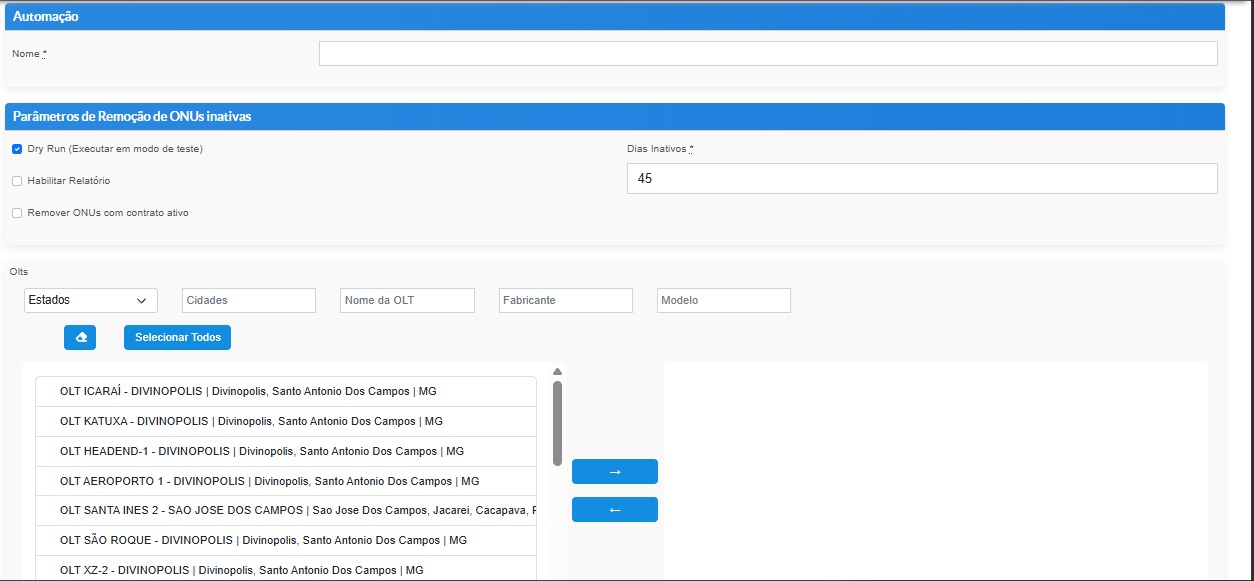
Define how many threads will run simultaneously:
| Scenario | Recommended amount |
|---|---|
| During daytime | Up to 10 threads |
| Overnight | Up to 40 threads |
¶ ❗ Fault Tolerance
- Maximum number of allowed failures during execution.
- When this value is reached, the automation is automatically stopped to prevent unwanted consequences.
¶ 🕒 Scheduling
The automation can be scheduled according to your needs:
- Specific date and time
- Recurring executions
- CRON configuration, enabling advanced schedules
After configuring everything, click Register to activate the automation.
¶ ✅ Finalization
Once registered, the automation will be ready for manual or scheduled execution.
It is essential to keep OLTs clean, remove orphan ONUs, and improve organization and performance of the GPON/EPON network.