¶ Release Notes - 26.05.1
¶ 🆕 New Features
--
¶ 1. New Mass Outage Monitoring System | Improvements and New Features
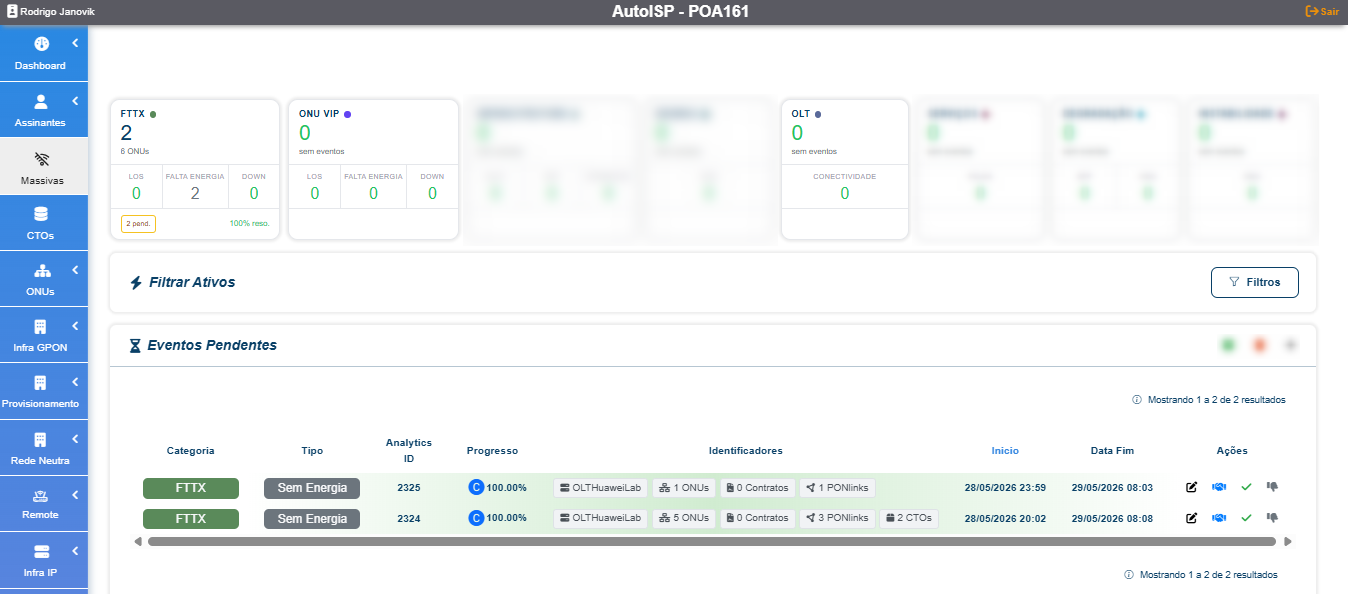
The new mass outage module has been implemented. The dashboard has been redesigned and now includes new features and new monitoring types, initially including OLT and VIP ONU monitoring.
It is now easier to visualize and filter mass outage events, with improvements to the search filters in the new dashboard.
New features for the mass outage module are already planned in the roadmap, including OLT infrastructure monitoring (Interface, SFP, Slot), VIP ONUs, optical signal degradation, and ONU instability.
--
¶ 2. ONU Status Reading for Furukawa OLTs
For Furukawa OLTs, ONU status reading by PON link has been implemented, as well as ONU UP/Down status identification for the sanitization module.
¶ ✨ Improvements
--
¶ 1. ONU Status Reading Optimization for Nokia OLTs
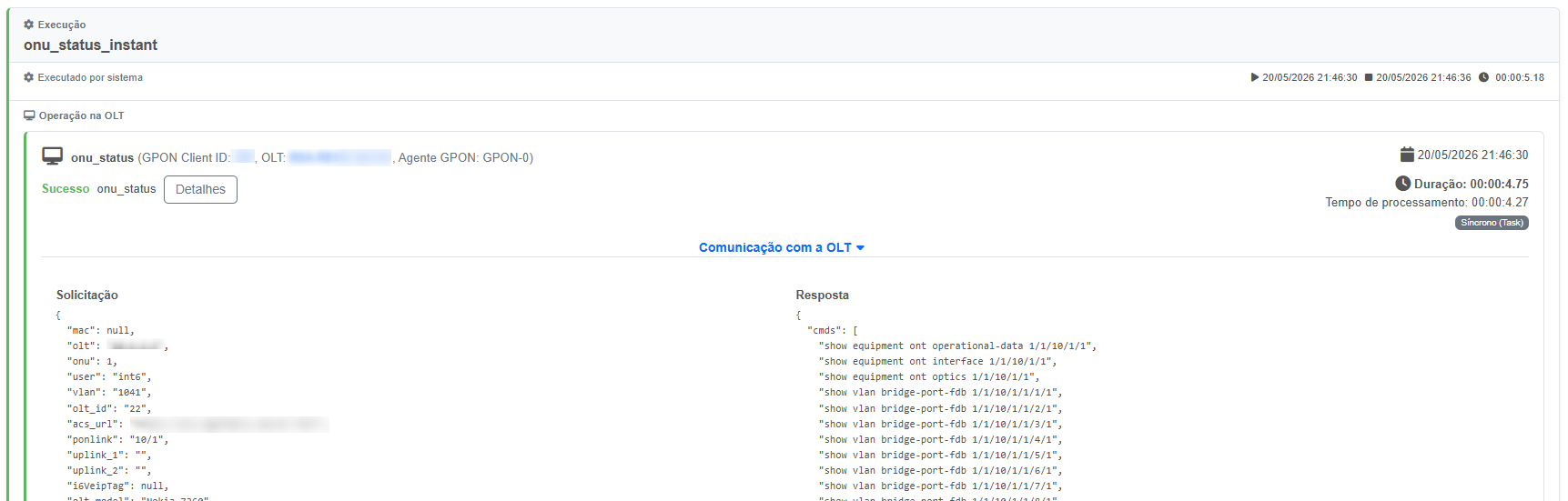
For Nokia OLTs, a performance improvement was implemented for ONU status reading when accessing the subscriber screen.
--
¶ 2. Subscriber Screen | DHCP Server
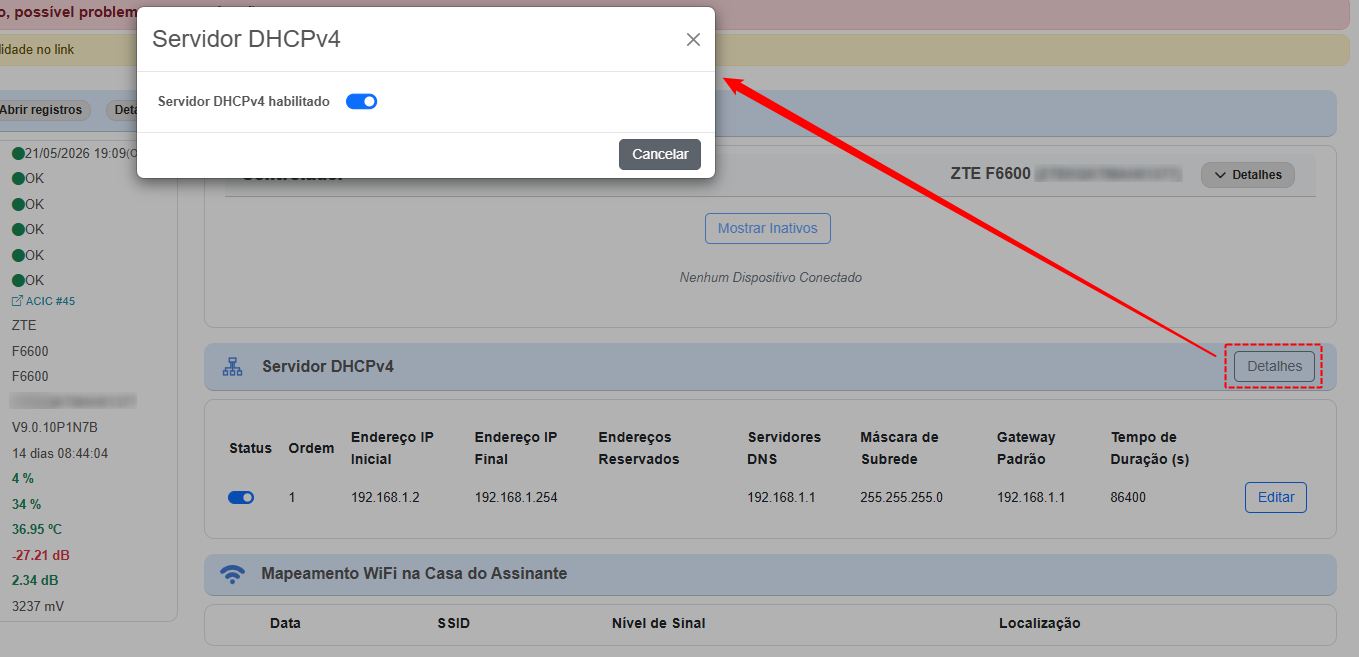
On the subscriber screen, in the router DHCPv4 server information section, the button to disable DHCP has been repositioned. The action is now available by clicking on Details.
--
¶ 3. Fix in ACS Firmware Update Validation
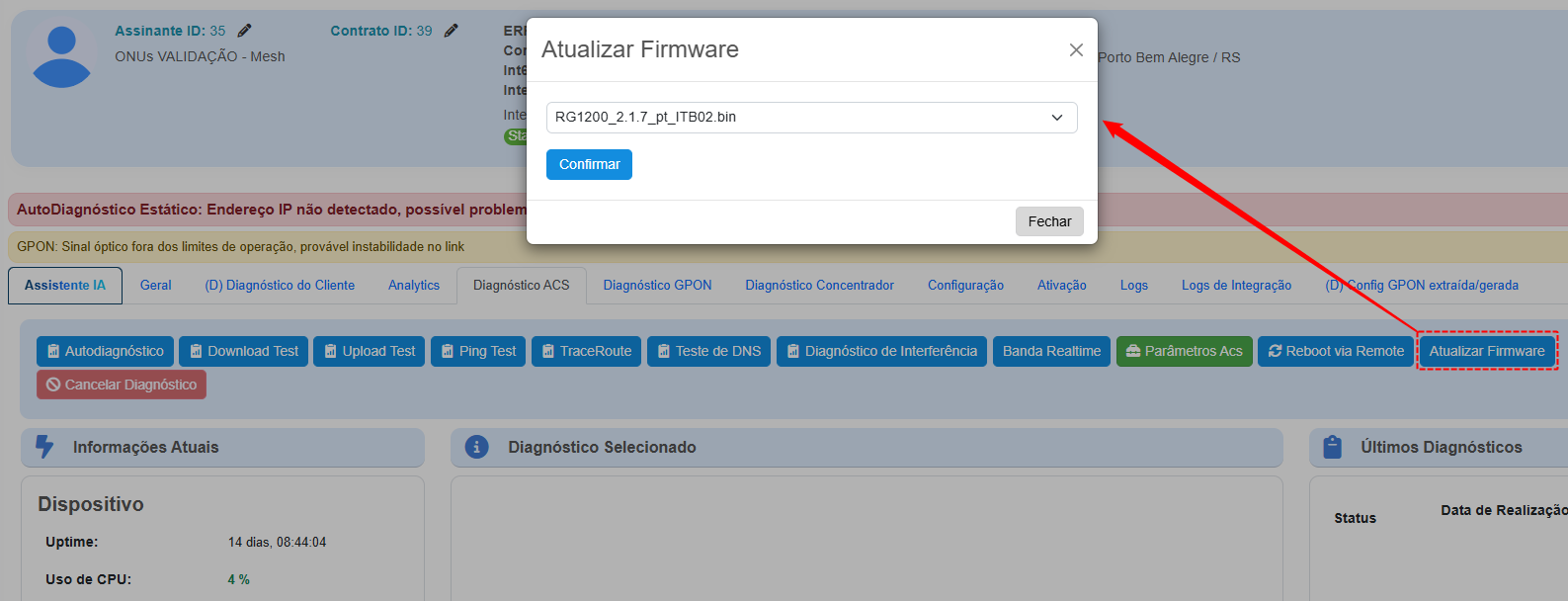
Adjustment to the automatic firmware update flow via ACS on the subscriber screen. Previously, the automation could incorrectly register failures during update validation before the device completed the firmware download, firmware write, and reboot process.
With the fix, the system now uses a longer waiting time for update confirmation, reducing the occurrence of false errors and ensuring more accurate validation of the new firmware version.
--
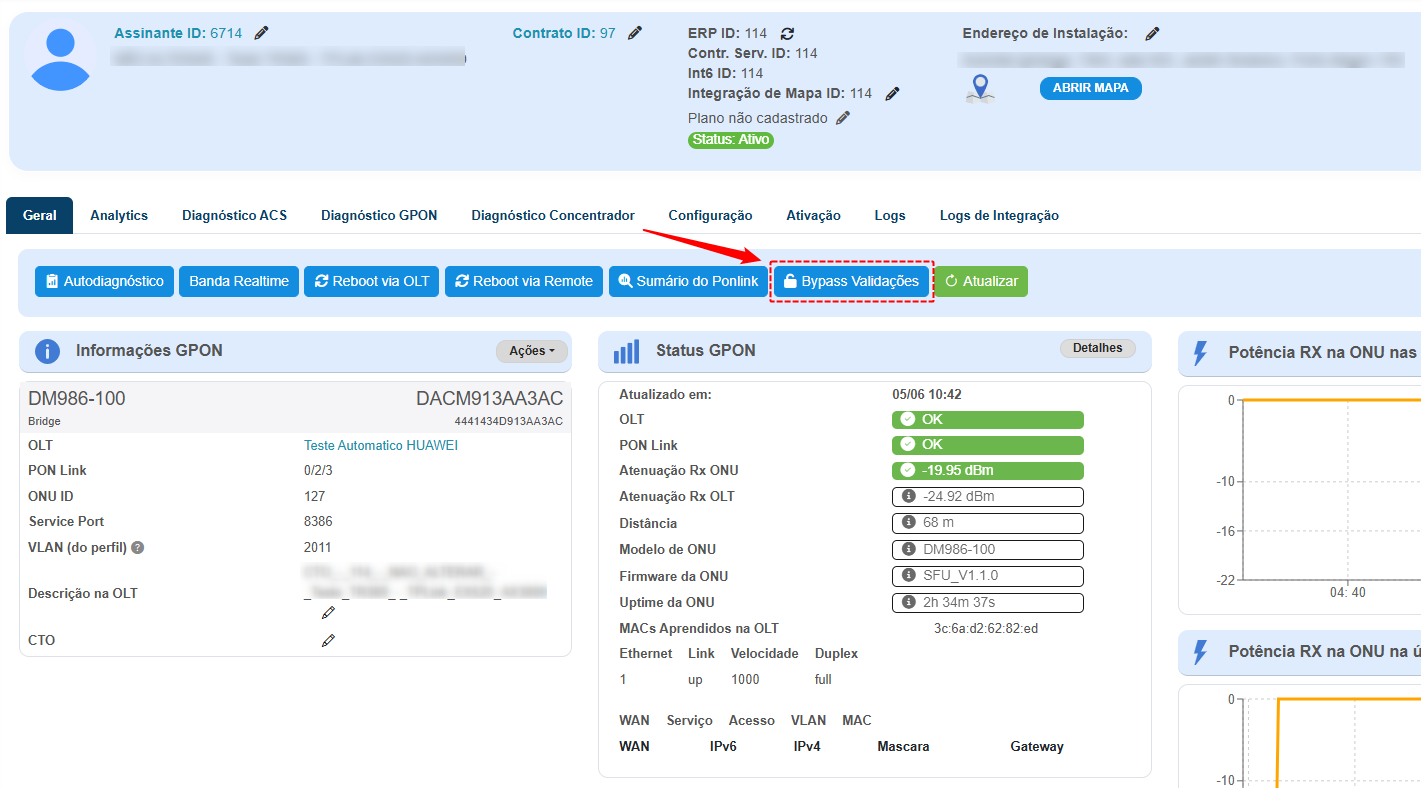
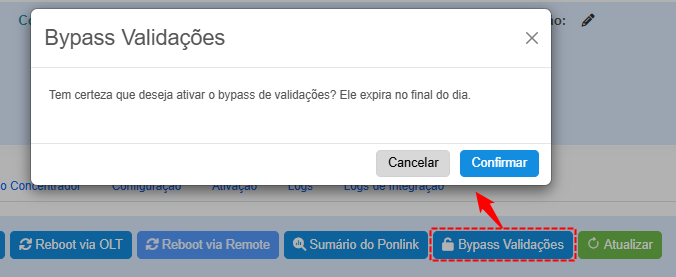
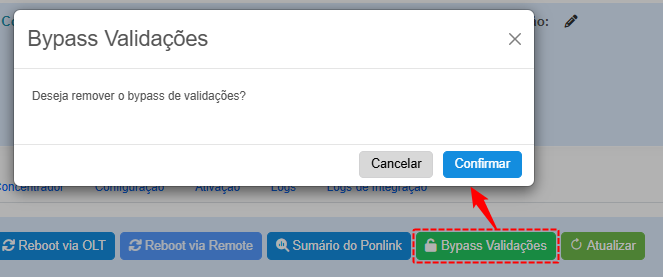
¶ 4. Visual Indicators for the Bypass Button | Subscriber Screen
Improvement to the subscriber screen for the “Bypass Validations” buttons. Now, when the feature is disabled, the button is displayed in blue; when enabled, it is displayed in green, making it easier to visually identify the status.
|
|
| ✅ Enabling the feature. | ❌ Disabling the feature. |
--
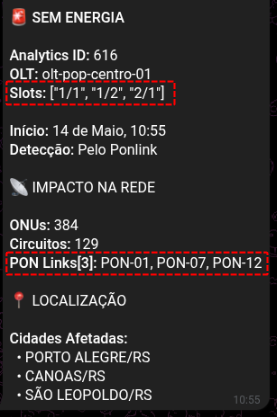
¶ 5. Mass Outage Event Alerts via Telegram
Improvement to the Telegram mass outage alert feature. Notifications now include additional information, such as the OLT Slot and PON link, providing more context for event analysis and troubleshooting.
To enable Telegram alerts, contact Int6 support.
--
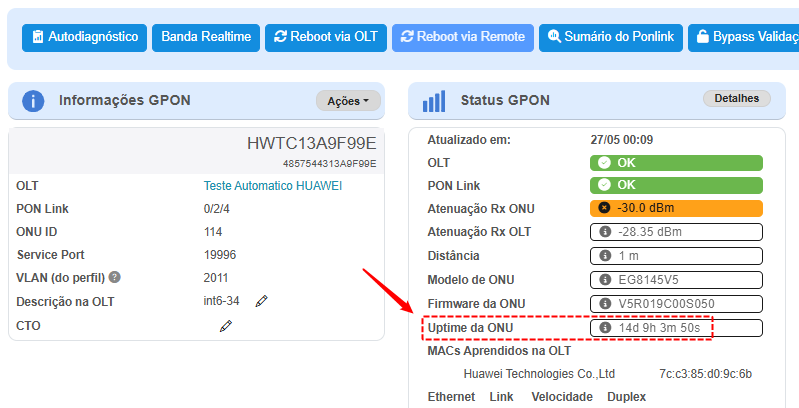
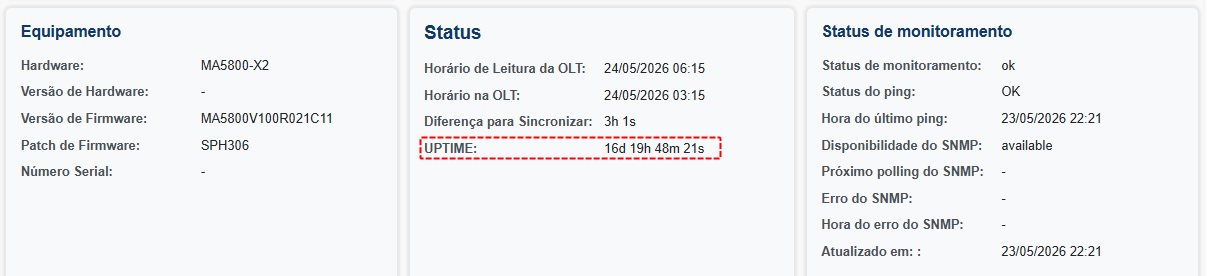
¶ 6. Improvement in ONU and OLT Uptime Display
Improvement in the presentation of ONU uptime on the subscriber screen and OLT uptime.
ONU uptime.
OLT uptime.
--
¶ 7. Standardization of Uptime Information
A refactor of the uptime routines in the GPON module was performed. With this change, the interface layer is now responsible for formatting and displaying the data, using a single and consistent source of information.
--
¶ 8. Expanded Diagnostic Data in the ACS API
Improvement to the /diag/v2/acs_status API, with the addition of the router_data field. The new field now provides translated information stored in cache within the portal database, expanding the available router diagnostic data and avoiding direct queries to ACS.
For more details, refer to the API documentation at https://api.int6tech.com.br/#description/introduction
Example response for the router_data field:
"router_data": {
        "acs_files": [],
        "acs_status_hash": null,
        "connected_devices": [],
        "device_info": {
          "access_password": null,
          "access_username": null,
          "admin_username": null,
          "analytics_tag": false,
          "connectionRequestUrl": null,
          "cpu_usage": null,
          "device_id": "00259E-EG8145V5-485754431815509F",
          "device_online_status": null,
          "firmware_version": "V5R019C10S130",
          "free_memory": null,
          "hardware_version": "159D.A",
          "id": "00259E-EG8145V5-485754431815509F",
          "last_inform": null,
          "manufacturer": "Huawei Technologies Co., Ltd",
          "model": "EG8145V5",
          "ongoingSession": null,
          "oui": "00259E",
          "periodic_inform_interval": null,
          "power": null,
          "product_class": "EG8145V5",
          "rx_power": null,
          "serial_number": "485754431815509F",
          "temperature": null,
          "total_memory": null,
          "tx_power": null,
          "uptime": null,
          "used_mem_percentage": null
        },
--
¶ 9. Improvement in Automatic Wi-Fi Interface Identification
An improvement was implemented in the automatic identification of Wi-Fi interface indexes. This routine, used by the Wi-Fi change API, has become smarter and less dependent on manual configurations, increasing compatibility and process reliability.
--
¶ 10. Ethernet Port Mapping in the ACS API
Improvement to the /diag/v2/live/acs_router_status API, with the addition of the ethernet_index and layer_2_interface fields. This change allows identification and return of the physical port (LAN/Ethernet) to which the device is connected, expanding network topology visibility regardless of the connection medium used.
"connected_devices": [
    {
      "index": 1,
      "mac": "string",
      "mac_manufacturer": "string",
      "ip": "string",
      "hostName": "string",
      "active": true,
      "connection": "string",
      "rssi": 1,
      "mesh_router": "string",
      "wifi_network_index": 1,
      "ethernet_index": "string",
      "layer_2_interface": "string"
--
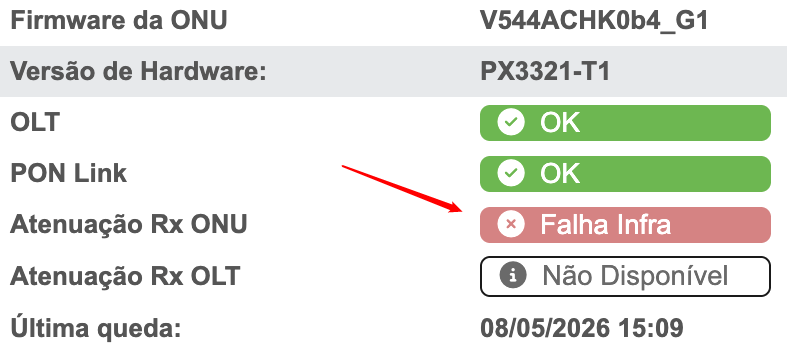
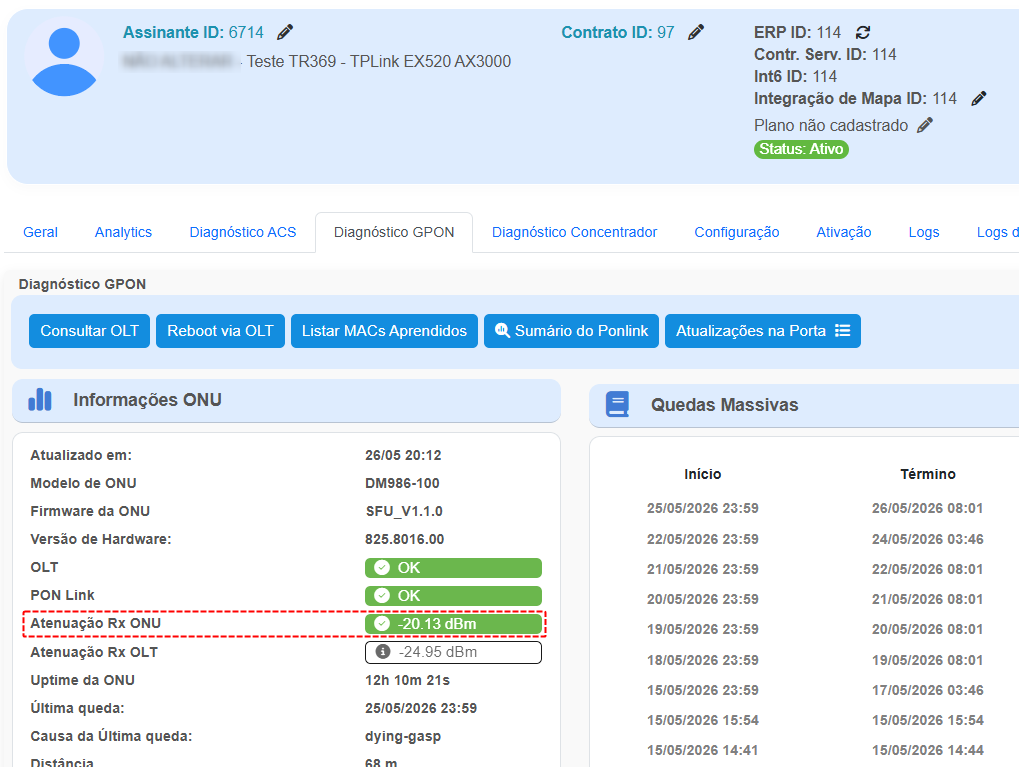
¶ 11. New “Infra Failure” Status for ONU
On the subscriber screen, a new ONU status has been added. The “Infra Failure” status will be displayed in the RX ONU field when an infrastructure failure is identified.
--
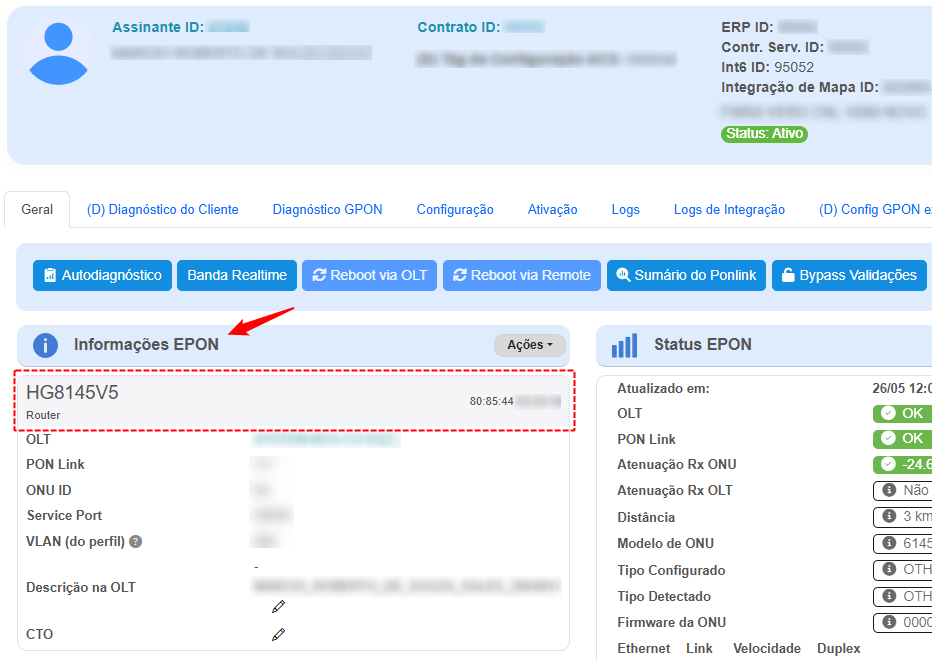
¶ 12. Improvement in MAC Visualization for EPON
The position of the ONU MAC field on the subscriber screen for EPON technology devices has been adjusted, simplifying the display of ONU information.
An improvement was also made to the title of the provisioning information panel for EPON scenarios, making the presentation more suitable for the technology used.
¶ 🐞 Fixes
--
¶ 1. Improvements to Subscriber Search Filters
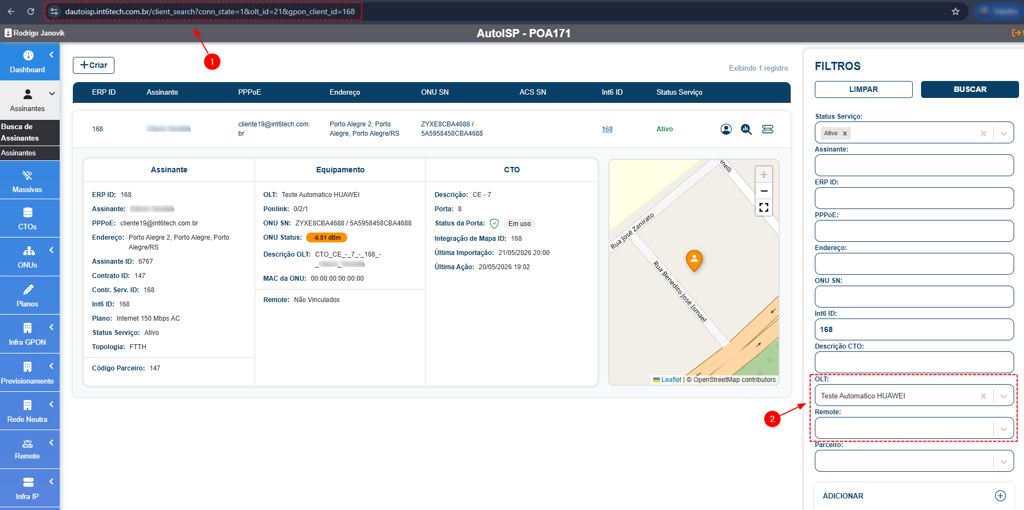
Fix applied to the subscriber search screen. Previously, additional filters were lost when returning to the subscriber listing. Now, the filters are persisted in the address bar, maintaining the performed search.
Additionally, the OLT and Remote filters have been incorporated into the main filter list, simplifying access and usage.
--
¶ 2. Hubsoft Integration Optimization
The integration with the Hubsoft ERP was adjusted to avoid exporting neutral network contract information, since these data are not used or maintained by the ERP.
--
¶ 3. Syntax Fix in Huawei Provisioning
Fix applied to the provisioning script for Huawei MA5600T OLTs with recent firmware (R015). Previously, the system did not correctly execute some commands via CLI, which could cause syntax errors during provisioning.
--
¶ 4. Fix in Nokia ONU Status Identification
Fix applied to the identification of the current ONU status on Nokia OLTs. The event interpretation rules were adjusted to ensure correct ONU state classification:
-
When
down-reasonisdying-gasp,inactiveis set to yes, and thedying-gaspflag is no, the status is power fail. -
When
down-reasonis loss-of-signal or ploam-inactive,inactiveis set to yes, and theloss-of-signalflag is no, the status is loss_signal.

--
¶ 5. Fix in OLT WAN MAC Validation
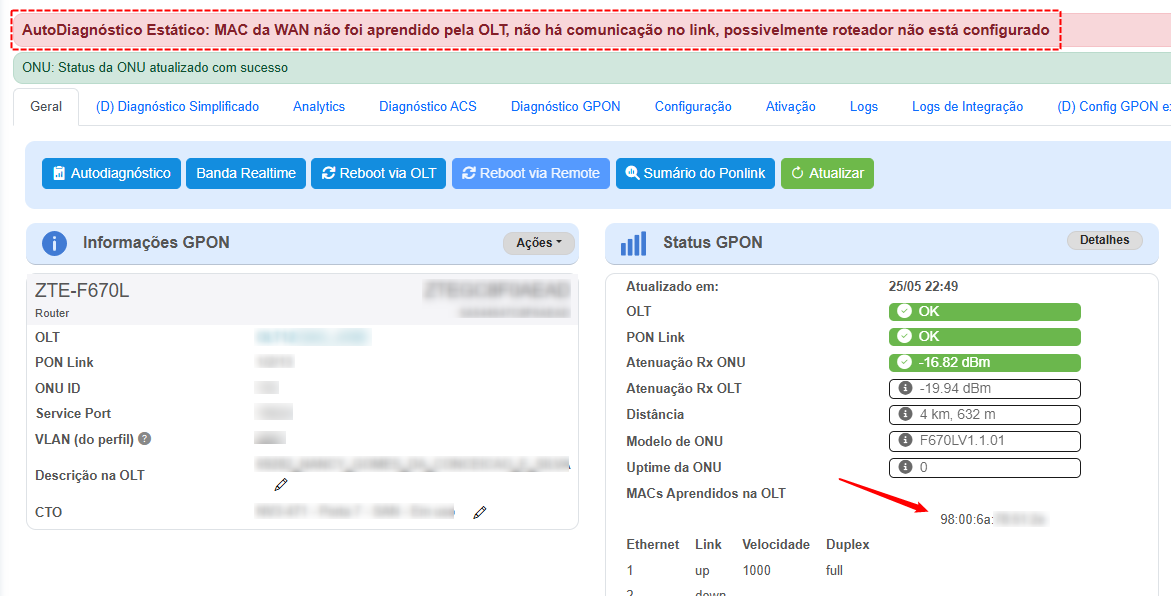
Fix applied to an issue on the subscriber screen that incorrectly informed that the WAN MAC had not been learned by the OLT, even when the MAC address was already present in the equipment configuration.
--
¶ 6. Fix in RBX ERP Import Validation
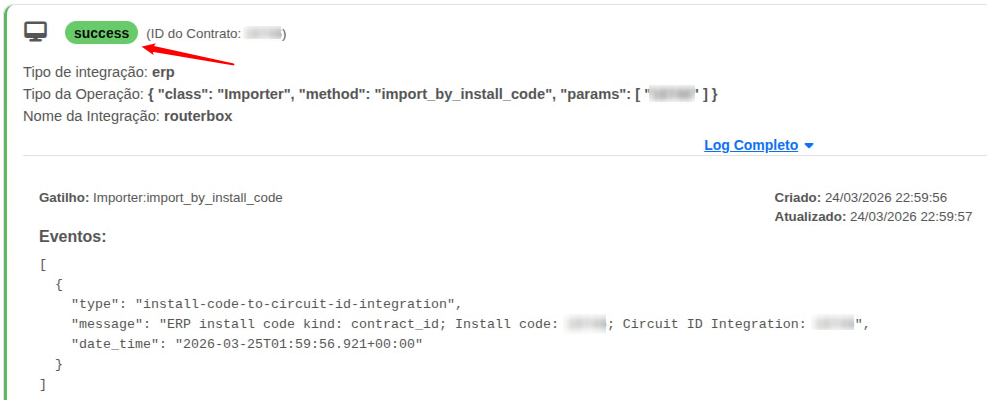
Fix applied to the RBX ERP (Router Box) importer. Previously, when a contract did not have a configured PPPoE user, the portal registered the import as successful. Now, this scenario is correctly handled and registered as an error during the import process.
--
¶ 7. Adjustment to the Cancellation Routine
An adjustment was made to the cancellation routine. The processing now includes all canceled contracts, regardless of the existence of an associated serial number.
--
¶ 8. Fix in IXC MAC Reset Error Handling
Fix applied to the error handling of the IXC ERP MAC reset API, ensuring proper handling of possible failures returned by the integration.
¶ 📲 Technician App - Improvements and Fixes
--
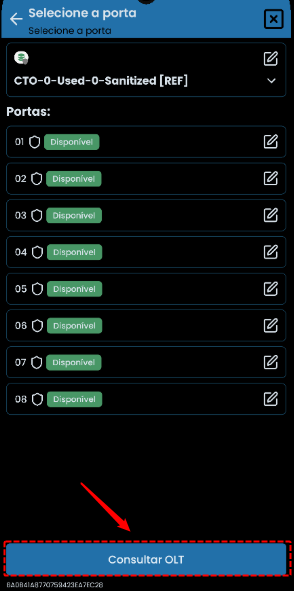
¶ 1. OLT Query in CTO Sanitization
Improvement to the CTO sanitization flow: upon entering the port selection screen, the Query OLT button was implemented to update the records.
--
¶ 2. Improvement in Power Reading for Nokia ONUs
An improvement was implemented in APP provisioning for the Nokia (OLT) x Nokia (ONU) scenario. Since ONU power reading may take a few minutes after provisioning due to the OLT update time, the validations were adjusted to increase the number of performed queries and display clearer messages in timeout or unexpected power scenarios.
--
¶ 3. Fix in QR Code Registration Flow
Fix applied to the APP when returning one step during the drop QR Code registration process. Previously, the flow could fail instead of correctly returning to the previous screen.