¶ Release Notes - 26.06.1
¶ 🆕 New Features
--
¶ 1. ACS Support for New Devices
ACS support has been implemented for the Phyhome P20 ONT/Router and Huawei HWTC 6.08.130 models.
--
¶ 2. New Step Event Monitoring
A new feature has been added to the Mass Outage module with support for Step events.
This new event type provides optical power variations and outage statistics for the affected ONUs, offering additional information for analyzing and troubleshooting network degradation.
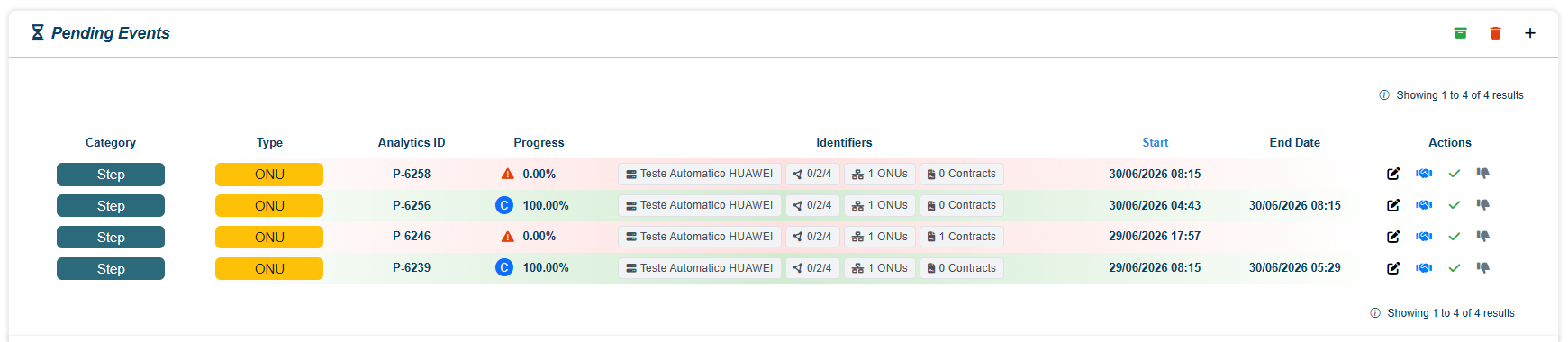
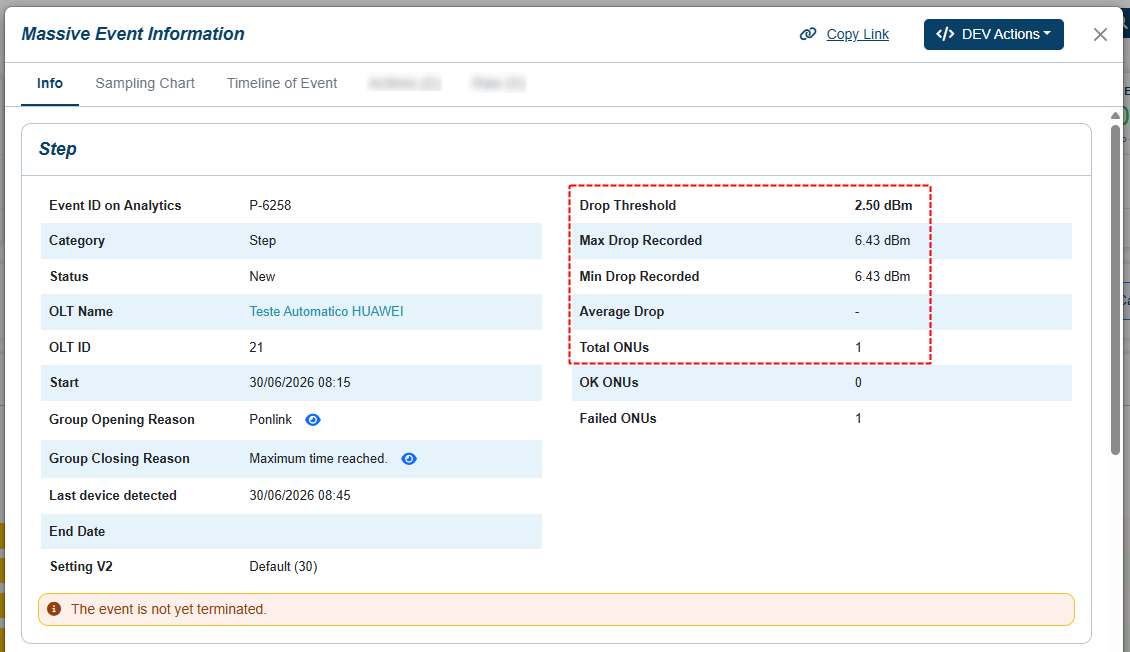
Prerequisites: In this release, the feature must be enabled by the Support team upon request via WhatsApp or by opening a ticket at https://int6tech.freshdesk.com/.
--
¶ 3. Automatic Technical Data Submission to Voalle ERP
A new feature has been implemented in the Voalle ERP integration to automatically send technical data after provisioning.
Once provisioning is completed, the system automatically sends information such as the ONU serial number, CTO, service port, and Wi-Fi data to the ERP, ensuring better synchronization between the platforms and reducing the need for manual updates.
--
¶ 4. Uptime Report Available in Analytics
The equipment uptime report has been re-enabled and is now available for download from the Analytics dashboard.

--
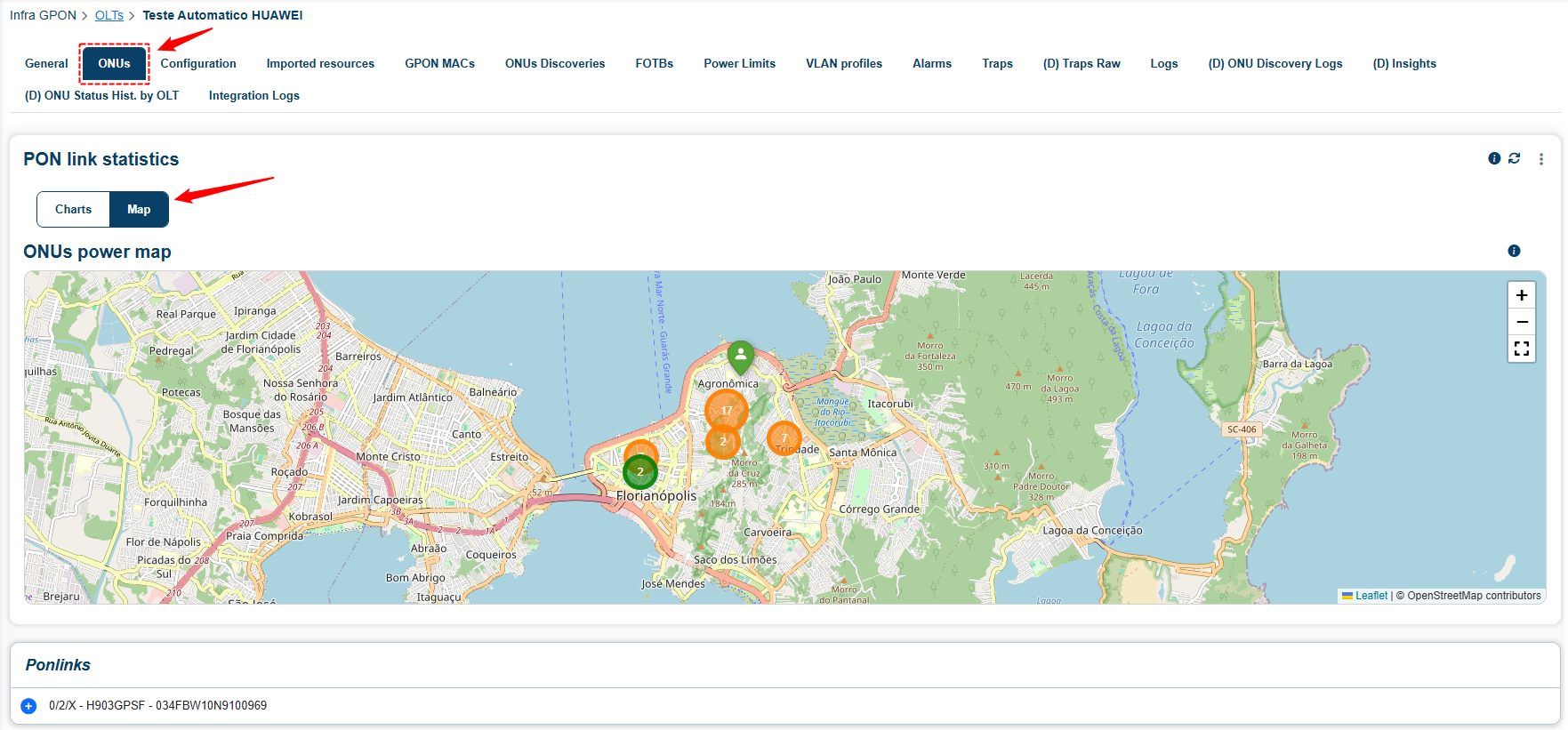
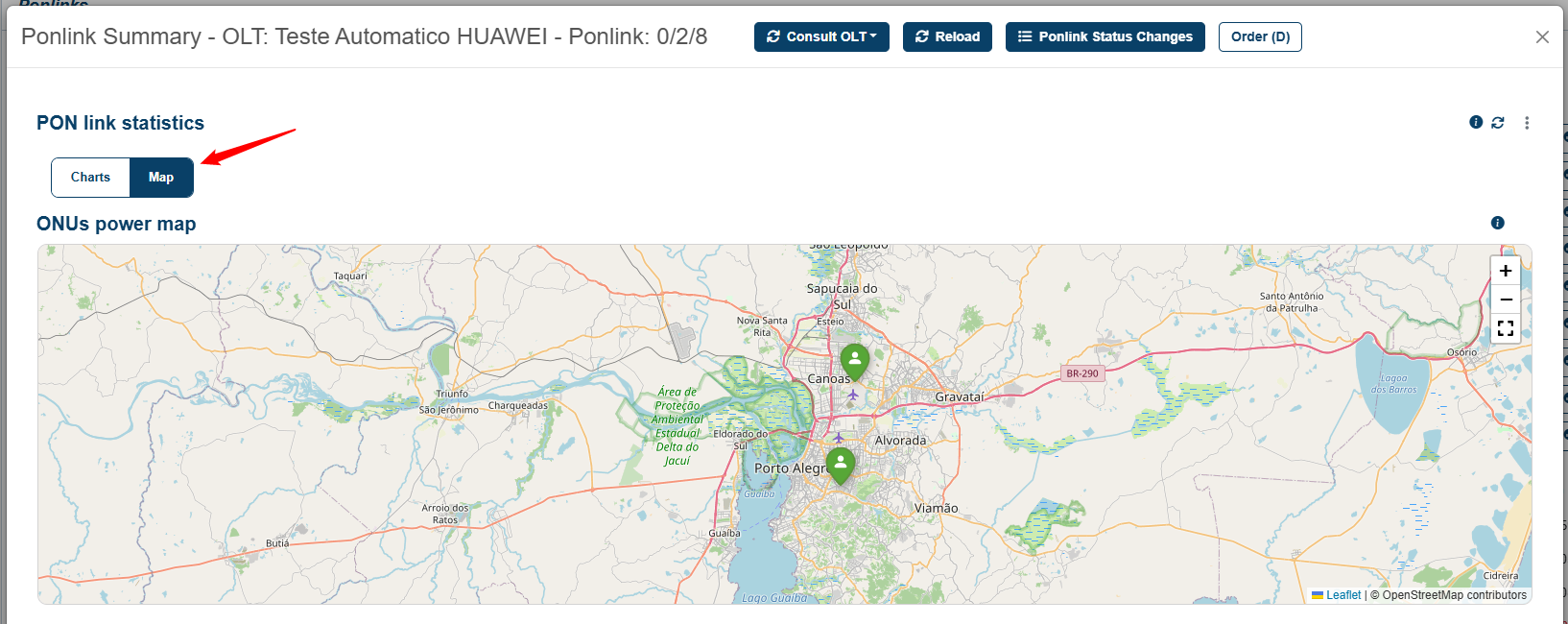
¶ 5. Geographic View of ONUs and PON Links
A new geographic view (map) tab has been implemented in the PON Link Summary and in the OLTs > ONUs screen.
In the PON Link Summary:
¶ ✨ Improvements
--
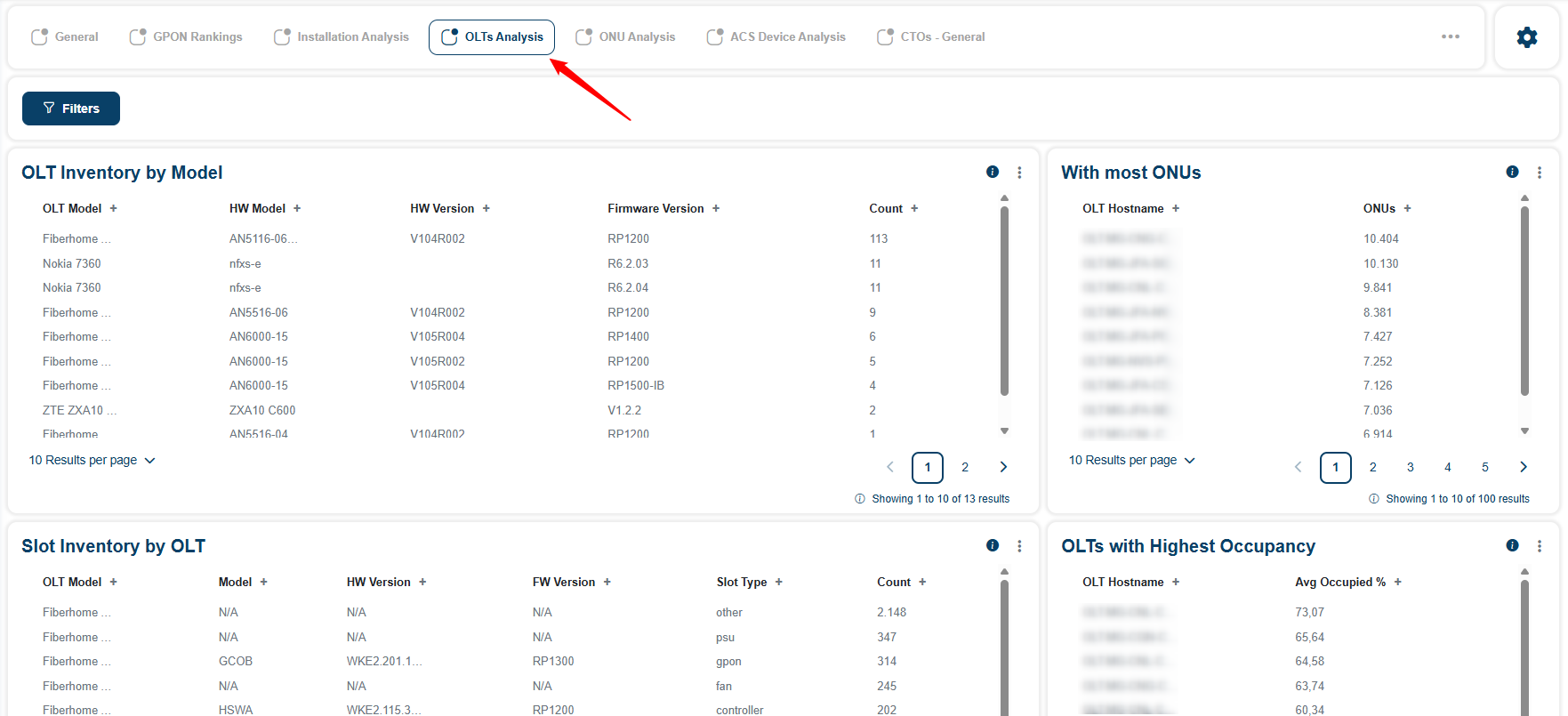
¶ 1. New OLT Views on the Main Dashboard
Implementation of new OLT views on the main dashboard, including occupancy indicators, critical ONUs, and slot inventory, as well as improvements to translations and filters.
--
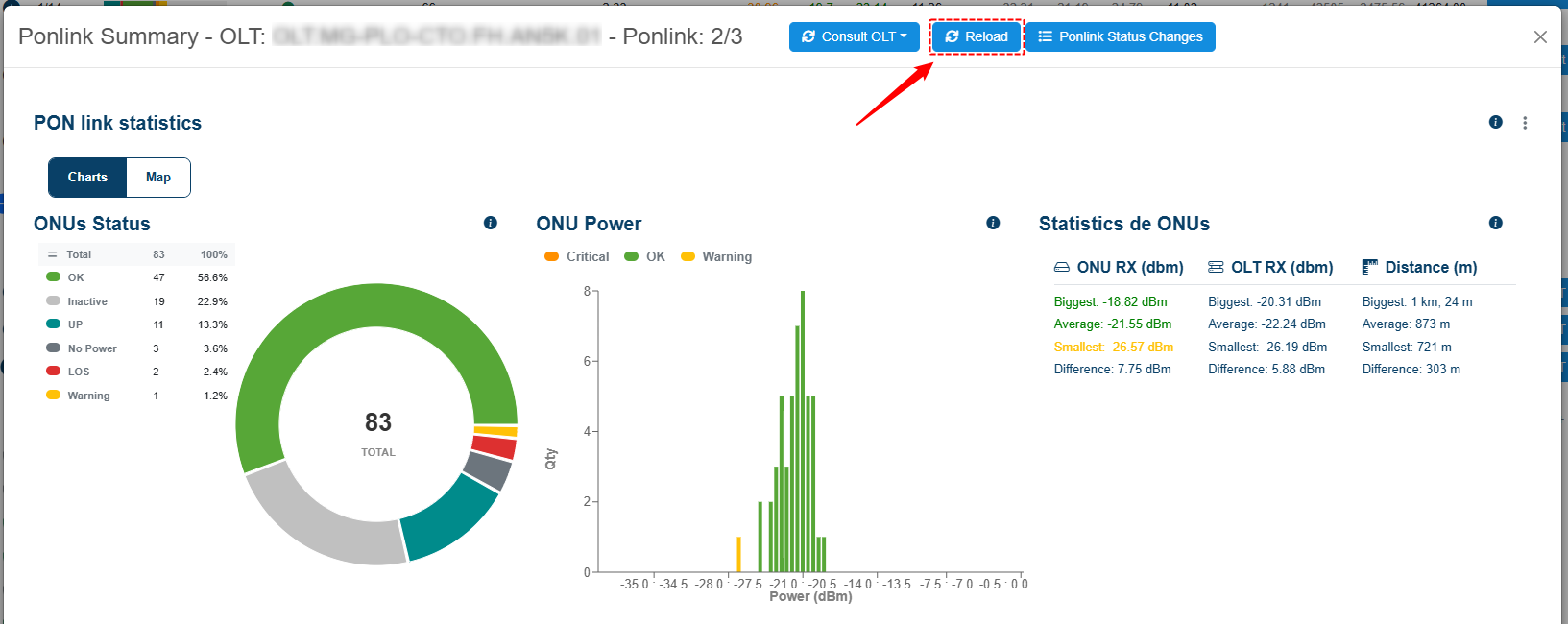
¶ 2. Quick Refresh in the PON Link Summary
A refresh button has been added to the PON Link Summary to update the data displayed in the frontend. This refresh reloads the information from the database into the interface without performing a new query to the OLT.
--
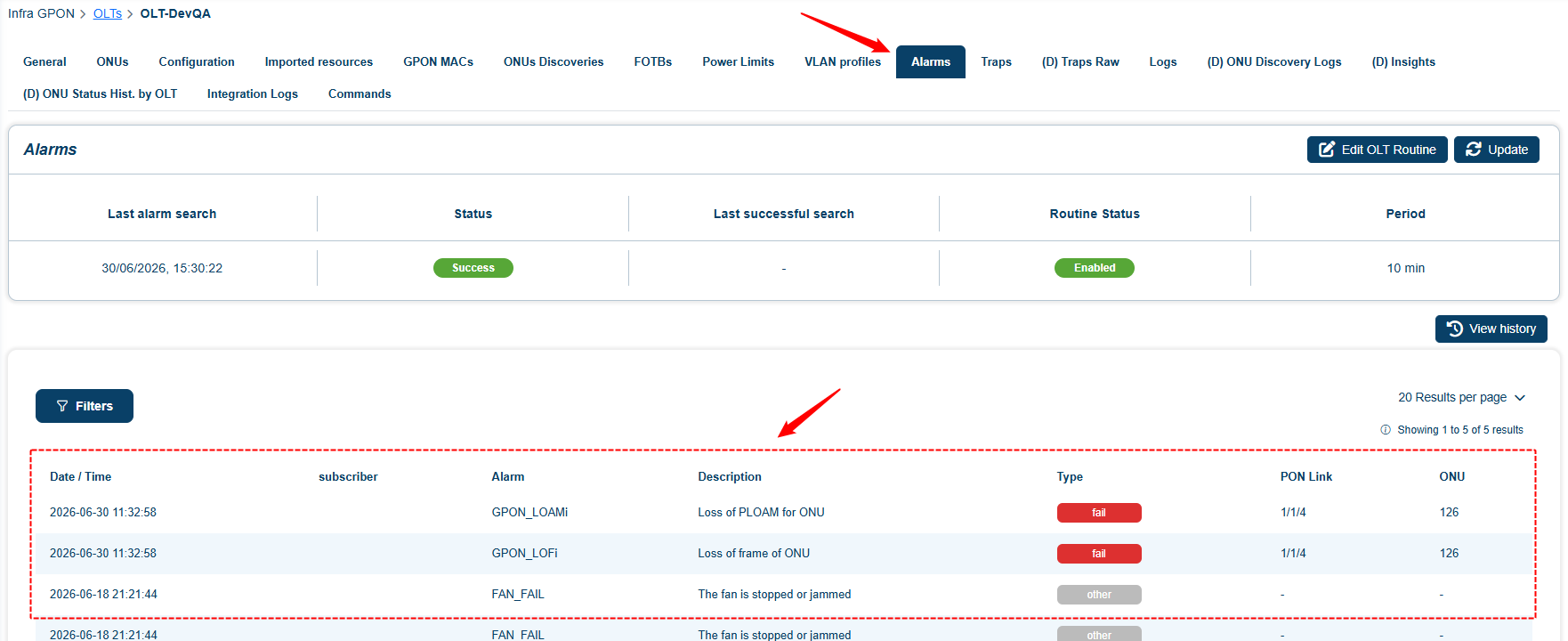
¶ 3. Alarm History on the OLT Screen
Implementation of alarm history visualization directly in the Alarms tab of the OLT screen.
--
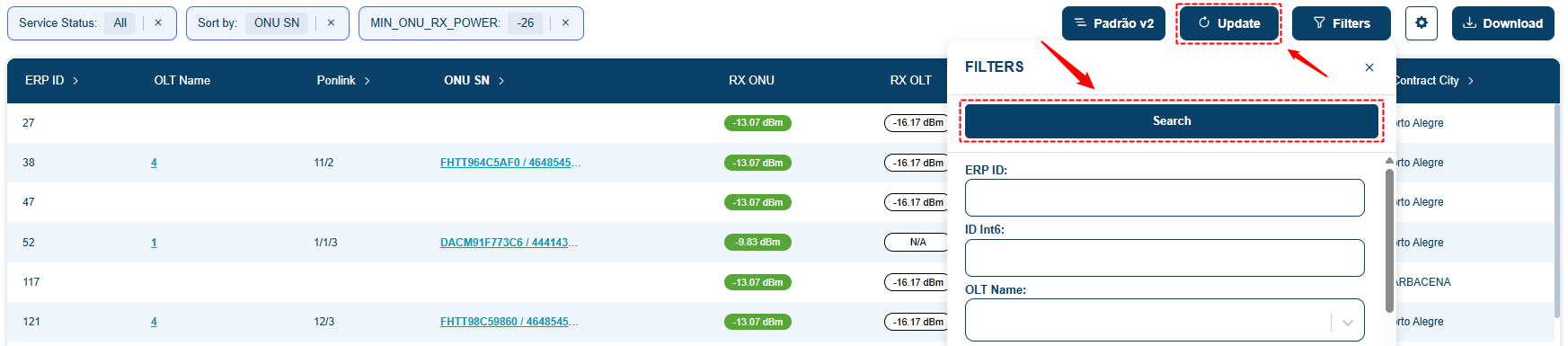
¶ 4. New Reload Button in Diagnostics
On the Diagnostics screen, available under ONUs → Diagnostics, a reload button has been added to force a data refresh while bypassing the cache. The search button has also been repositioned within the filter panel.
--
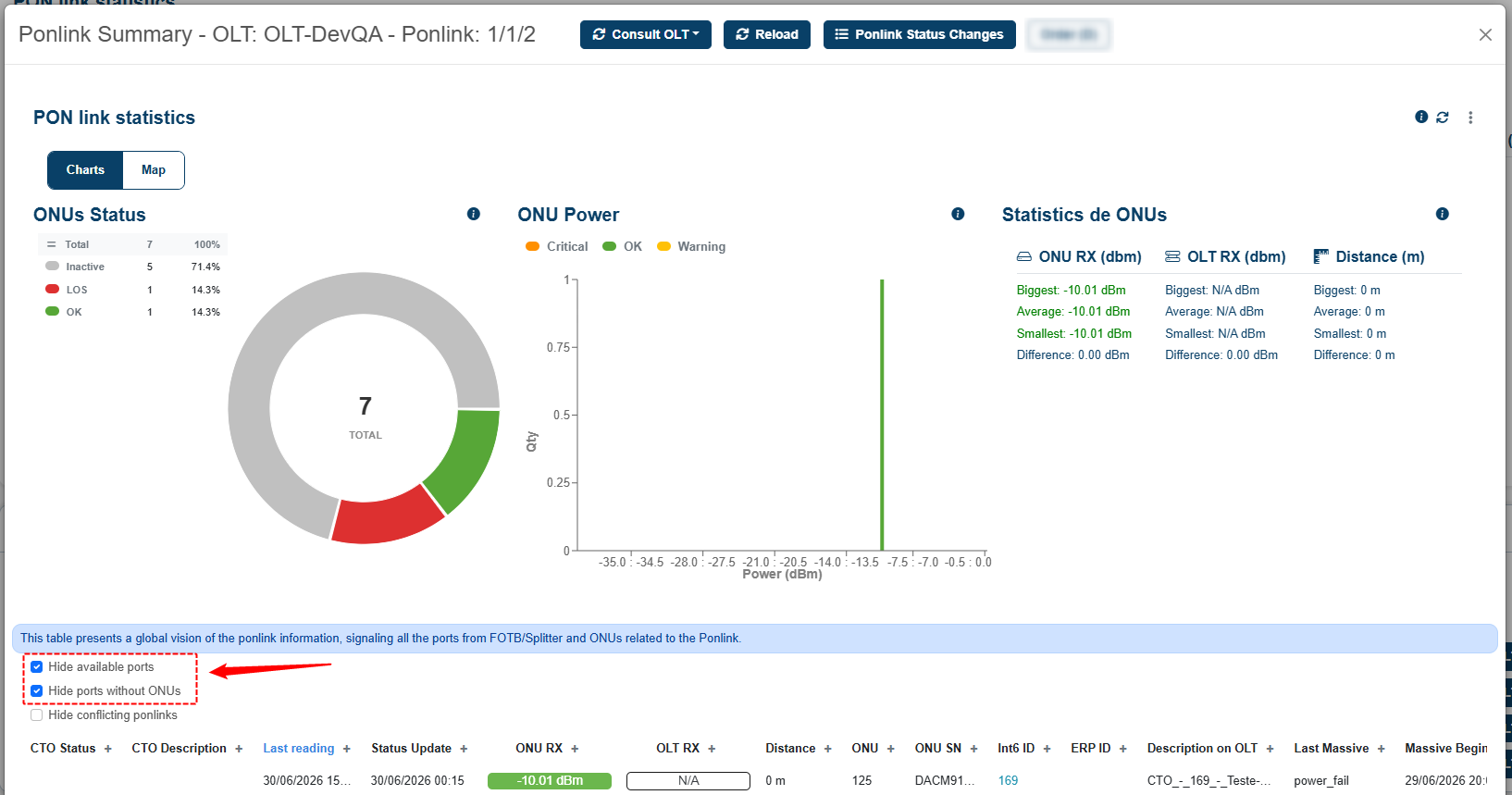
¶ 5. PON Link Visualization Optimization
The default configuration of the PON Link Summary now starts with the "Available Ports" and "Ports Without ONU" filters selected, making it easier to visualize the records.
--
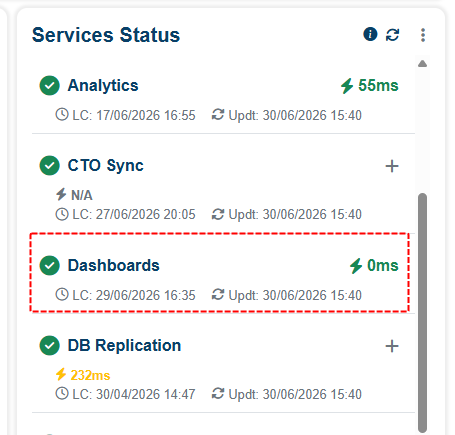
¶ 6. Dashboard Health Monitoring
Development of health monitoring for the dashboard service, based on the processing queue size of the main dashboard reports.
--
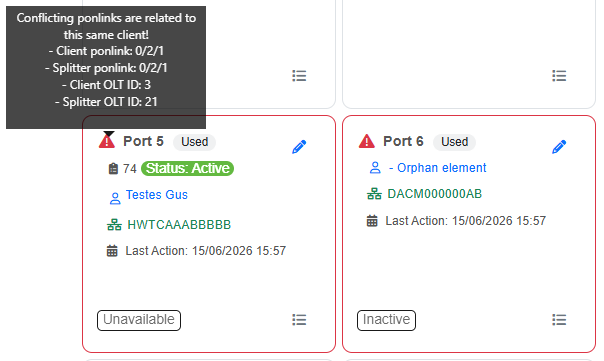
¶ 7. CTO and OLT Conflict Detection
Enhanced conflict detection to identify discrepancies when the OLT assigned to the CTO differs from the actual OLT where the customer is provisioned.
--
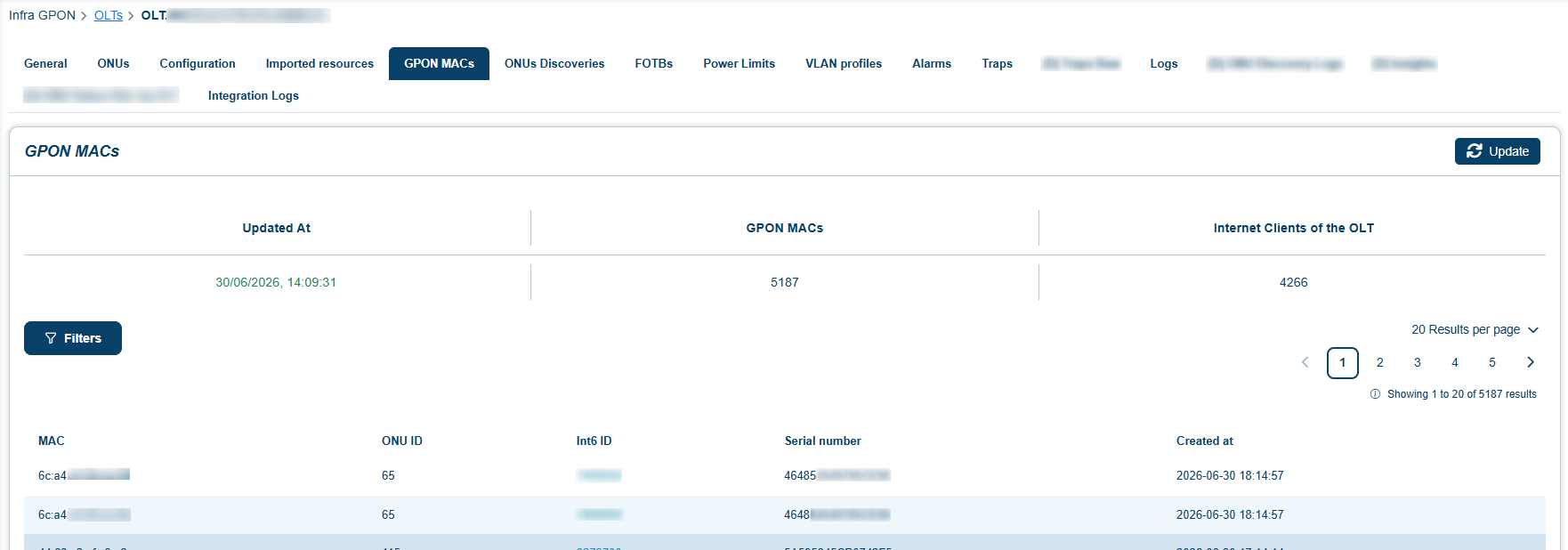
¶ 8. MAC Address Management on the OLT Screen
A new tab has been added to the OLT screen for querying and managing MAC addresses collected via GPON.
The feature centralizes MAC address information, making it easier to perform queries, analysis, and management actions directly from the Portal.
--
¶ 9. Improved Log Display for ZTE OLTs
Handling of control characters on ZTE OLTs to ensure that logs from long command executions are displayed correctly and remain readable in the Portal.
--
¶ 10. Date and Time Standardization for Huawei OLTs
Standardization of date and time handling for Huawei drivers by centralizing the UTC normalization logic.
--
¶ 11. Performance Optimization on the ONU Models Screen
Performance optimization on the ONU Models screen through the removal of resource-intensive counting operations and migration to dashboards.
--
¶ 12. Connected Devices Visualization
Implementation of a real-time connected devices list in the self-service Wi-Fi password change interface for subscribers.
--
¶ 13. Improvements to the OLT List
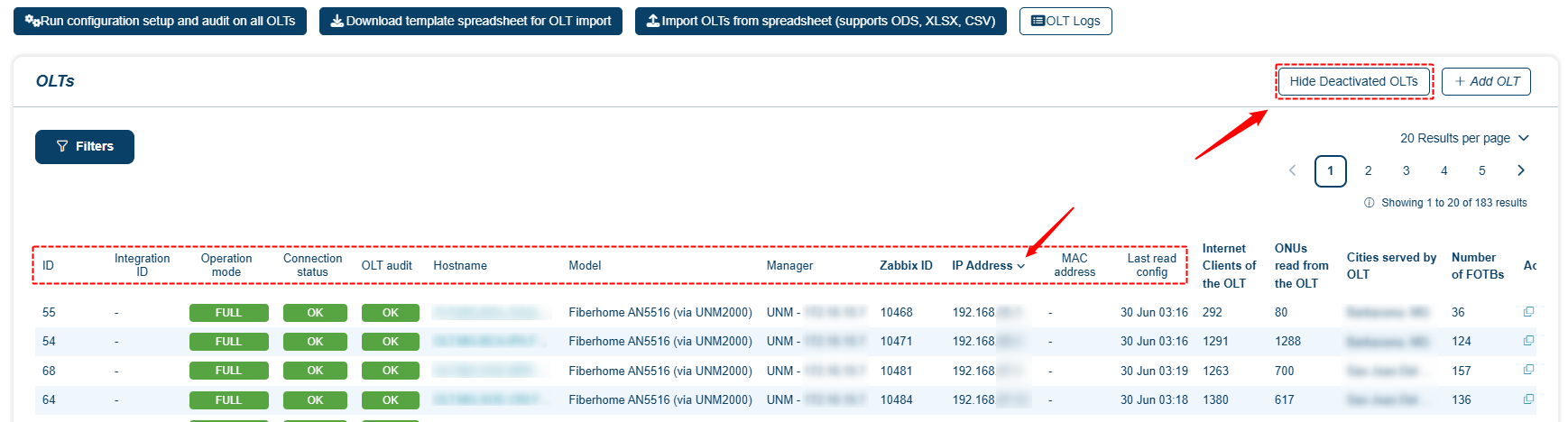
On the OLTs screen, the button to hide disabled OLTs has been restored, and column sorting capabilities have been expanded in the OLT list table.
¶ 🐞 Fixes
--
¶ 1. Fix for Search Filters in Mass Outage Events
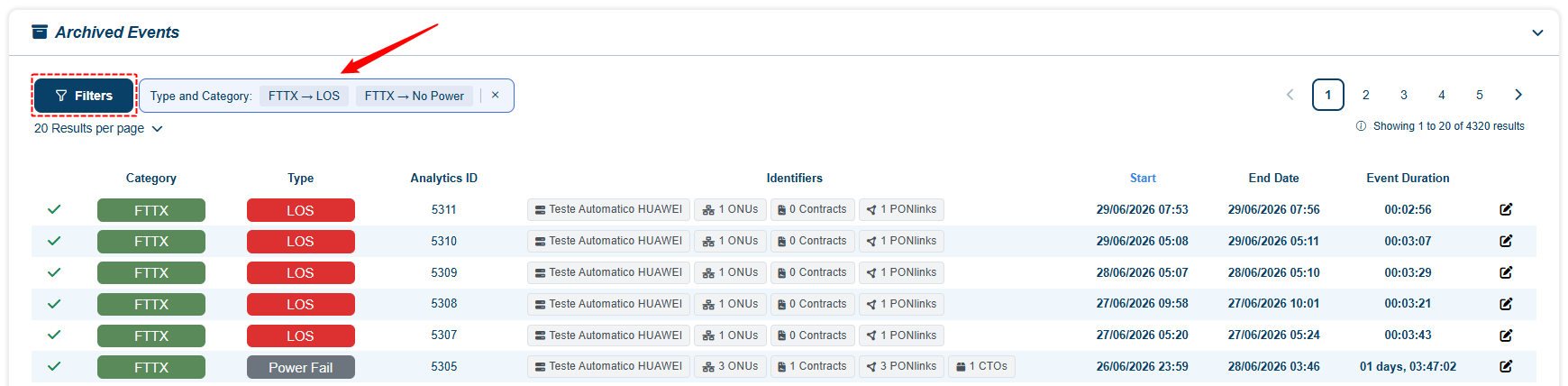
Fix applied to the search filters on the Mass Outage Events screen.
It is now possible to filter archived mass outage events simultaneously by multiple categories and event types, providing more accurate and flexible searches.
--
¶ 2. Fix for Counter Display in Mass Outage Events
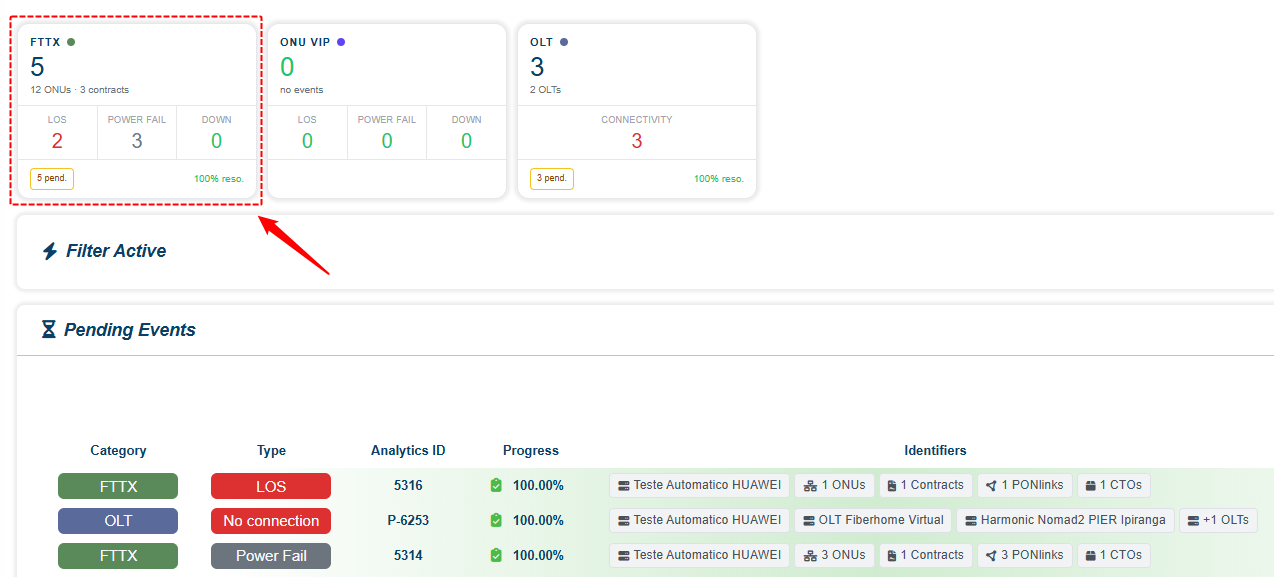
The display of counters on the Mass Outage Events dashboard has been adjusted.
When there were no pending events, the panels occupied the entire width of the screen, affecting the layout of the interface. The display has been refined to provide a more balanced view and improve the navigation experience.
¶ 📲 Technician App - Improvements and Fixes
--
¶ 1. Connectivity Traceability During Provisioning
Improvement to the provisioning app with the addition of connectivity change tracking during workflow execution.
Starting from version 21.4.4, the app records when the technician switches between Wi-Fi and mobile network (4G/5G) connections, providing greater traceability for provisioning process analysis and troubleshooting.
--
¶ 2. Average Latency Display in Connectivity Tests
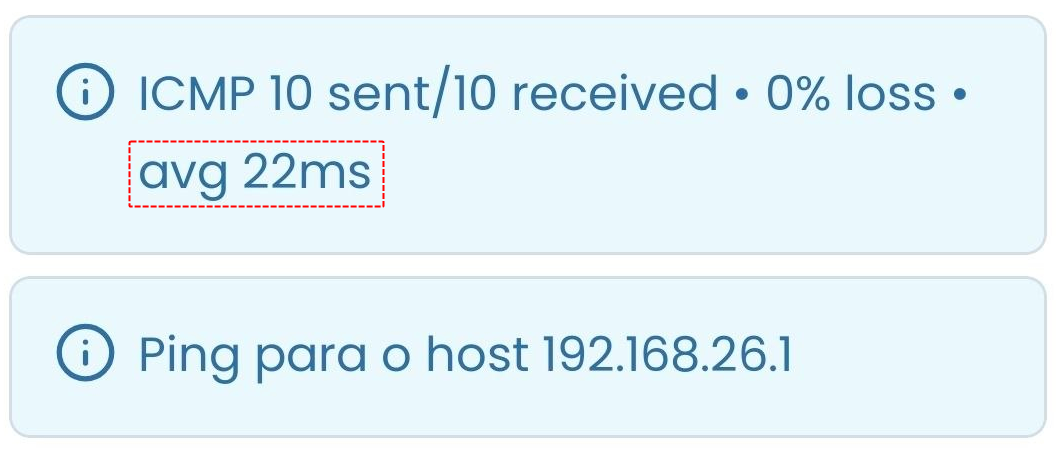
Adjustment to the app's connectivity tests to display the average latency (RTT) instead of only the total execution time.
--
¶ 3. New FWA Provisioning Workflow
Development of a dedicated provisioning workflow for FWA technology in the app, including support for new serial number formats.